Best College Fits for Alaska Students 2026
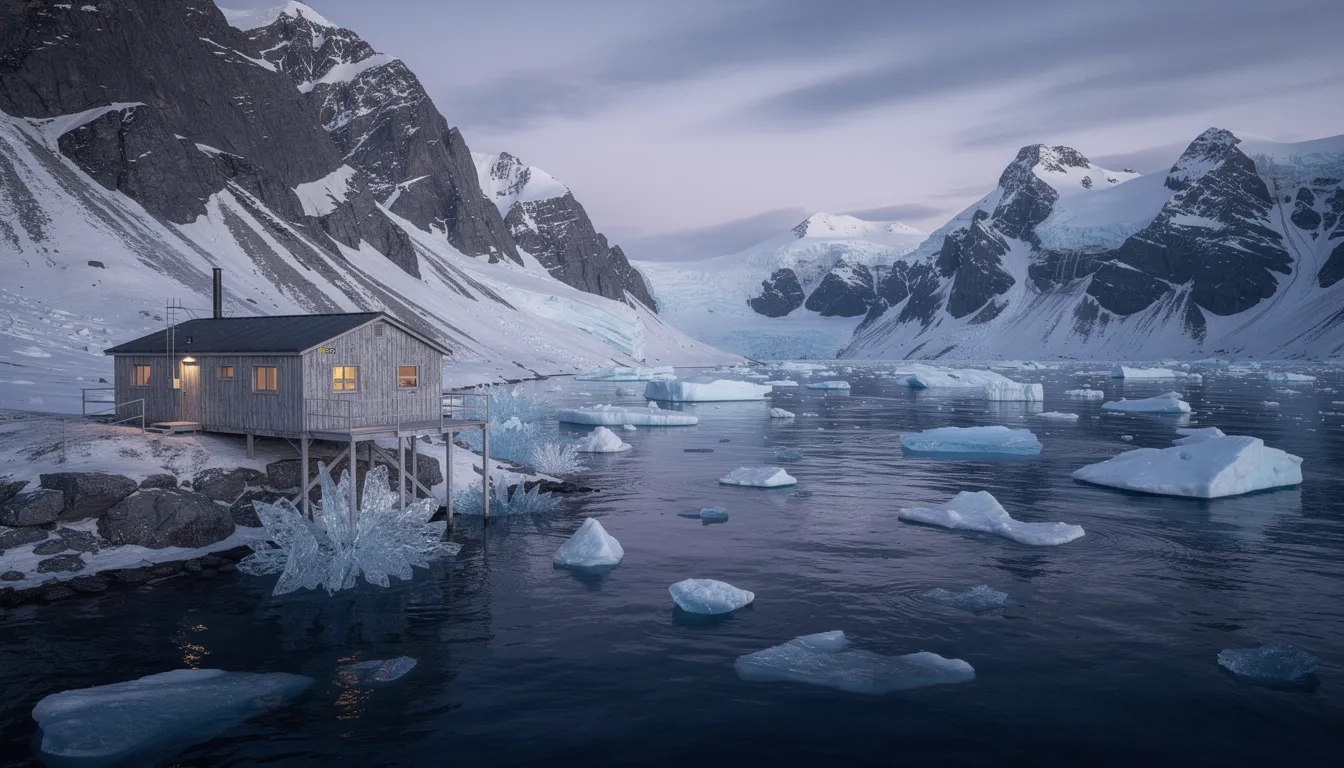
If you're a high school junior or senior in Anchorage, Fairbanks, Juneau, Wasilla, or a village off the road system, the phrase "best college fit" probably feels like it was written for someone else — someone with a dozen East Coast liberal arts campuses within driving distance. It wasn't. Alaska students have a genuinely distinct set of trade-offs: a small in-state system that just went through the biggest tuition shake-up in its history, a scholarship program that rewards rigor over raw wealth, and a regional tuition-exchange program that quietly makes hundreds of Lower 48 public universities nearly as affordable as home. This guide works through all of it with verified 2026 numbers — no generic "top 50 colleges" filler.
The fast answer: best fits by student profile
| If you are... | Best fit | Why |
|---|---|---|
| Drawn to Arctic science, engineering, or research | University of Alaska Fairbanks (UAF) | Home to the Geophysical Institute, International Arctic Research Center, Institute of Arctic Biology, and College of Fisheries and Ocean Sciences |
| Looking for the lowest-cost, most flexible in-state option | University of Alaska Anchorage (UAA) | Largest UA campus, ~$7,900/year resident tuition and fees estimate, strong nursing, engineering, aviation, and health programs |
| Wanting a small, close-knit coastal campus | University of Alaska Southeast (UAS) | About 2,300 students across Juneau, Sitka, and Ketchikan; "professors know you by name" scale |
| Interested in outdoor recreation, sustainability, or a private-college feel | Alaska Pacific University (APU) | ~580 students total, nationally competitive Nordic ski program, working-farm sustainability campus in Palmer |
| Set on leaving Alaska without paying full nonresident tuition | A WUE-participating Western public university | Alaska residents can access ~170 public colleges across 15 Western states/territories at reduced rates through the Western Undergraduate Exchange |
| Chasing merit money tied to a rigorous high school record | Any UA campus + the Alaska Performance Scholarship | Up to $7,000/year for students who complete a rigorous curriculum and meet GPA/test-score thresholds |
In-state anchor #1: University of Alaska Fairbanks (UAF)
UAF is Alaska's flagship research campus and the obvious first stop for any student who wants to study the Arctic rather than just live in it. As of fall 2024, UAF enrolled 6,893 students (5,827 undergraduate, 1,066 graduate) on its 2,250-acre main campus in College, Alaska, just outside Fairbanks, plus six additional rural and urban campuses statewide.
What sets UAF apart academically is its research infrastructure: the Geophysical Institute (seismology, volcanology, aeronomy), the International Arctic Research Center, the Institute of Arctic Biology, the College of Fisheries and Ocean Sciences, and the College of Engineering and Mines. Few undergraduates anywhere in the country get this kind of direct access to polar and cold-climate research as freshmen and sophomores.
2026-2027 verified tuition (Alaska residents):
- $310 per credit at the Troth Yeddha' (Fairbanks) campus for F100–F499 level courses
- $251 per credit at UAF's Community Campus
- Estimated full-time annual cost of attendance (30 credits, tuition + mandatory fees + housing/food): $25,230 for residents
- Nonresident annual estimate: $43,950 (see the tuition policy change below — this gap is closing)
UAF's national rankings are modest by design of a small research flagship — U.S. News lists it around 388th (tied) among national universities — but rankings undersell a school whose actual research footprint (Arctic climate, seismology, fisheries) is globally referenced. If a student's goal is a specific scientific niche rather than brand-name prestige, UAF is a genuine, defensible best fit.
In-state anchor #2: University of Alaska Anchorage (UAA)
UAA is the system's enrollment workhorse and the most practical choice for students who want breadth, urban location, and the lowest sticker price. Fall 2023 enrollment was 10,796 (10,162 undergraduate), with a 12:1 student-faculty ratio and 53.1% of classes under 20 students — numbers that push back on the assumption that a big public university means big lectures.
2026-2027 verified tuition (Alaska residents):
- Lower-division (A050–A299): $251/credit
- Upper-division (A300–A499): $302/credit
- Estimated full 2026 undergraduate tuition and fees: roughly $7,914/year for residents
Program strengths: nursing (one of UAA's oldest and most established programs), engineering, aviation (air traffic control, aviation administration, professional piloting — a rare undergraduate offering nationally), and health/social welfare. For a student who isn't sure yet what they want to study, UAA's breadth and location in Anchorage (internships, health systems, state government, the state's largest job market) make it the safest low-cost anchor choice.
In-state anchor #3: University of Alaska Southeast (UAS)
UAS is the right call for a student who wants a genuinely small campus experience without leaving the state — and it just became one of the most interesting stories in Alaska higher ed. UAS enrolls about 2,300 students system-wide (fall 2024) across three campuses: Juneau (main campus, 198 acres between Auke Bay and Auke Lake), Sitka (healthcare, fisheries technology, nursing), and Ketchikan (home to the Regional Maritime and Career Center and the state's only Associate of Applied Science in Marine Transportation).
Academic strengths track directly with Southeast Alaska's economy and geography: marine biology, fisheries (run in partnership with UAF), the Alaska Coastal Rainforest Center, and outdoor studies. UAS describes itself as "small enough your professors know you by name" — a fair claim given its size.
2026-2027 verified tuition: $251/credit lower-division, $302/credit upper-division for undergraduates. Since 2025-26, UAS has run a pilot policy called Alaska Unlocked, under which all undergraduates — regardless of home state — pay the same resident rate. That's a genuinely unusual model, and it's already reshaping who applies (more on this below).
Alaska's private option: Alaska Pacific University (APU)
APU is Alaska's only private university and a legitimately different animal from the UA campuses: small, mission-driven, and built around sustainability and outdoor life. Enrollment was 578 total students in fall 2023 (437 undergraduate, 141 graduate) — meaning class sizes and advisor access look more like a small liberal arts college than a public university.
APU sits in Anchorage adjacent to UAA, plus a second Kellogg Campus in Palmer built around a 700-acre working farm and environmental learning center for its sustainability program. Founded in 1957 as Alaska Methodist University and renamed in 1978, APU partnered with the Alaska Native Tribal Health Consortium in 2016. It is also nationally known for its Nordic Ski Team, which has sent athletes to every Winter Olympics since 1972, including gold medalist Kikkan Randall.
Verified 2026 cost: $20,350 tuition + $410 fees, with total cost of attendance (including room/board) around $33,661/year. That's meaningfully higher than any UA campus, but APU's most recent accreditation review (Spring 2025) found it "substantially compliant" with Northwest Commission on Colleges and Universities standards, and reported assets of roughly $167.7 million — worth noting given periodic online chatter questioning small private colleges' stability. There is no current evidence of closure or major financial distress; it's operating on a normal academic calendar for 2026-27.
The story that changes everything: Alaska is eliminating out-of-state tuition
This is the single most important piece of context for any Alaska family planning around UA costs in 2026, and it's brand new. In August 2026, the University of Alaska Board of Regents unanimously approved eliminating the nonresident tuition rate system-wide, effective fall 2027, across UAA, UAF, and UAS and at all degree levels. UAS had already piloted the policy — branded "Alaska Unlocked" — a year earlier.
Why it matters for residents specifically:
- Your tuition rate isn't changing. Resident rates stay the resident rates listed above. The policy removes the nonresident surcharge, not resident pricing.
- UA cited administrative overhead as the driver, not a budget grab: about 85% of nonresident students already receive waivers down to near-resident rates, and staff were spending roughly 50 work-hours a day managing that discounting process system-wide.
- It's already changing who your classmates are. At UAS, the pilot drove a 36% jump in newly enrolled out-of-state students and a 21% rise in out-of-state applications in one year, with new students arriving from 28 states — mostly Washington, California, Colorado, Idaho, Minnesota, and Wisconsin. UAS's chancellor has cautioned that it's too early to say whether this is displacing Alaska resident enrollment or just adding capacity.
- It makes WUE moot at UAS specifically — once every undergraduate already pays the resident rate, the Western Undergraduate Exchange (which discounts to 150% of resident tuition) offers no added benefit there. WUE still matters for Alaska residents looking to leave the state, which is the next section.
Leaving Alaska without paying sticker price: the Western Undergraduate Exchange (WUE)
For an Alaska student who wants a bigger campus, a different climate, or a specific program the UA system doesn't offer at scale, the Western Undergraduate Exchange is the tool to know. WUE is run by the Western Interstate Commission for Higher Education (WICHE) and lets residents of 15 Western states and territories — including Alaska — enroll at any of roughly 170 participating public two- and four-year institutions at no more than 150% of that school's resident tuition rate, instead of full nonresident tuition (which WICHE notes can run up to 300% of the in-state rate). WICHE estimates the average WUE student saves about $12,517 per year compared to paying full nonresident tuition. One important caveat: time spent in WUE status does not count toward establishing residency in the host state.
A concrete, verified example: Northern Arizona University (Flagstaff) is a confirmed WUE participant. For the 2023-24 year, NAU's rates were $12,652 (resident), $18,328 (WUE), and $28,900 (full nonresident) — meaning WUE cut the out-of-state premium by more than half. NAU also runs a "world-renowned" forestry program dating to 1958 through its College of the Environment, Forestry, and Natural Sciences, which is a natural draw for Alaska students interested in resource management or wildland science, on a forested 829-acre campus at 6,950 feet elevation.
Because WUE participation and discount levels are set institution-by-institution and can change year to year, treat the rest of this list as strong shortlisting candidates based on program fit rather than confirmed current WUE partners — always verify live eligibility and pricing on the school's own site or WICHE's official Tuition Savings Finder before counting on the discount:
- Western Washington University (Bellingham, WA) — home to Huxley College of the Environment, the first U.S. college dedicated to interdisciplinary environmental studies, plus the Shannon Point Marine Center; ~14,700 students.
- Cal Poly Humboldt (Arcata, CA) — the nation's largest undergraduate botany program, a unique-in-the-CSU-system wildlife degree, one of only two oceanography majors in California, and the Fred Telonicher Marine Laboratory; ~6,000 students, coastal redwood-forest campus.
- Montana State University (Bozeman, MT) — strong earth sciences and engineering (Norm Asbjornson College of Engineering), over $257.9 million in annual research expenditures; ~17,100 students.
- University of Idaho (Moscow, ID) — College of Natural Resources (established 1917 as a forestry school) and mining/geological engineering programs; ~12,400 students.
- South Dakota School of Mines & Technology (Rapid City, SD) — a small, engineering-and-geology-focused technical school with a 98% bachelor's placement rate and average starting salary above $72,000; ~2,600 students.
Given how many Alaska industries (fisheries, mining, oil and gas, environmental management) map directly onto these programs, WUE is often the most realistic path to an out-of-state degree without private-school-level debt.
Alaska-specific financial aid: the Alaska Performance Scholarship and more
Alaska Performance Scholarship (APS): This is the state's flagship merit award and it rewards academic rigor across a range of achievement levels, not just top-of-class students. Per the Alaska Commission on Postsecondary Education (ACPE) and UAF's own financial aid office, current award tiers are:
| Tier | Annual award (up to) | GPA path | Test-score alternative |
|---|---|---|---|
| 1 | $7,000 | 3.5+ | ACT 25 / SAT 1210 |
| 2 | $5,250 | 3.0+ | ACT 23 / SAT 1130 |
| 3 | $3,500 | 2.5+ | ACT 21 / SAT 1060 |
To qualify, a student must complete a specific rigorous high school curriculum and be a resident planning to attend a participating Alaska college or university. Eligibility can be used for up to 8 semesters within 6 years of high school graduation, full awards require 12+ credits per term (half-awards for 6-11 credits), and continuing eligibility requires a 2.5 GPA plus meeting credit-completion benchmarks. Applications for the current cycle open October 1 and close June 30; the FAFSA should be filed by June 30 for priority consideration as well.
Other Alaska-resident aid worth knowing about, per UAF's financial aid office:
- UA Scholars Award — up to $15,000 total, typically awarded to top-decile graduates of Alaska high schools
- Nanook Pledge (UAF-specific) — $2,000–$4,000 annually for qualifying students
- Alaska Education Grant — $500–$4,000, need-based
- Over 400 additional foundation scholarships searchable through Alaska's AWARDED database
Stack these against APS and a WUE or resident tuition rate, and many Alaska students can meaningfully undercut the "sticker price" narrative that dominates national college-cost conversations.
Common misconception: "There's really only one serious public option in Alaska"
Alaska families often default to treating UAF as the university and UAA/UAS as fallback options, or assume APU is "just the ski school." Both framings undersell real differences in fit:
- UAA is not a lesser UAF — it's a different kind of institution built for breadth, urban access, and professional programs (nursing, aviation, engineering) that UAF doesn't emphasize the same way.
- UAS is not a "commuter college" in a negative sense — its small scale is a deliberate, valid fit for a student who wants faculty who know their name and hands-on marine/fisheries work, not a consolation prize.
- APU is a legitimate small private college with real sustainability, environmental, and outdoor-studies infrastructure (including a 700-acre working farm campus), not merely a training ground for its well-known Nordic ski program.
- A newer misconception worth heading off: some families now assume the system's move to eliminate nonresident tuition means Alaska residents will pay more to "subsidize" incoming out-of-state students. That's not what the policy does — resident rates are unchanged; the university is removing the out-of-state surcharge, largely to cut administrative overhead and grow enrollment, which supports program stability system-wide.
- Finally, don't assume WUE only helps you leave Alaska for "outdoorsy" schools — it applies broadly across business, health, and technical programs at any of the ~170 participating institutions, not just environmental-science-flavored ones.
How an Alaska student should actually build their college list
- Start with the in-state baseline. Run the real numbers for UAA, UAF, and UAS side by side (tuition + fees + housing, using the 2026-27 figures above) before assuming any of them is "the cheap one" — the gap between them is smaller than most families expect, and program fit should usually decide, not price alone.
- Apply for the Alaska Performance Scholarship regardless of GPA level. With three tiers reaching down to a 2.5 GPA / ACT 21, more students qualify for something than families assume.
- If you want to leave the state, check WUE eligibility before ruling a school out on cost. A "$28,000 out-of-state school" can become an $18,000 WUE school — verify current participation and rate directly with the school's admissions or financial aid office, since lists change annually.
- Watch the 2027 tuition change if you're a junior right now. If your timeline puts you starting at a UA campus around fall 2027, confirm with each campus how the elimination of nonresident tuition is being implemented and whether it affects any current out-of-state or WUE arrangement you're counting on.
- File the FAFSA every year, on time. Alaska Performance Scholarship priority consideration and most UA institutional aid are tied to FAFSA deadlines (June 30 for APS priority) — treat this as non-negotiable, not optional paperwork.
- Weigh program depth over prestige rankings for niche interests. UAF's national ranking (388th, U.S. News) looks unimpressive next to its actual standing in Arctic and polar science — for a specific-interest student, the research infrastructure matters more than the ranking number.
FAQ
Is the University of Alaska system actually eliminating out-of-state tuition? Yes. The UA Board of Regents unanimously approved eliminating the nonresident tuition rate across UAA, UAF, and UAS at all degree levels, effective fall 2027. UAS began piloting an equivalent policy, called Alaska Unlocked, a year earlier.
Does this tuition change mean Alaska residents will pay more? No. Resident tuition rates are unchanged by this policy. The change removes the nonresident surcharge; it doesn't restructure resident pricing.
What is the Alaska Performance Scholarship worth, and who qualifies? It's a state merit scholarship with three tiers — up to $7,000/year (3.5+ GPA or ACT 25/SAT 1210), up to $5,250/year (3.0+ GPA or ACT 23/SAT 1130), and up to $3,500/year (2.5+ GPA or ACT 21/SAT 1060) — available to Alaska resident high school graduates who complete a required rigorous curriculum and attend a participating Alaska institution, usable for up to 8 semesters within 6 years of graduation.
How does the Western Undergraduate Exchange (WUE) actually save money? WUE caps tuition at participating public colleges in 15 Western states/territories at no more than 150% of that school's resident rate, versus full nonresident tuition that can run up to 300% of in-state rates. WICHE estimates average savings around $12,517/year. Confirm current participation directly with each school, since eligibility and discount levels can change annually.
Is Alaska Pacific University a stable choice, given it's a small private school? Current evidence supports yes — APU's most recent accreditation review (Spring 2025) found it substantially compliant with Northwest Commission on Colleges and Universities standards, it reported roughly $167.7 million in assets, and it's operating on a normal 2026-27 academic calendar. There's no verified indication of closure or major restructuring underway.
Which UA campus is best for a student interested in Arctic or environmental science specifically? University of Alaska Fairbanks is the clearest fit, given its Geophysical Institute, International Arctic Research Center, Institute of Arctic Biology, and College of Fisheries and Ocean Sciences. For a smaller-scale, coastal/marine-focused alternative, University of Alaska Southeast in Juneau — with its Alaska Coastal Rainforest Center and fisheries partnership with UAF — is also a strong, much smaller-campus option.
Sources
- University of Alaska to eliminate out-of-state tuition for 2027 academic year (KTOO)
- More out-of-state students opt for UAS with new in-state tuition rate (Alaska Public Media)
- Cost of Attendance | University of Alaska System
- Tuition, Fees and Costs | University of Alaska Fairbanks Catalog
- Tuition and Fees | University of Alaska Anchorage Academic Catalog
- Tuition and Fees | University of Alaska Southeast
- Alaska Pacific University Tuition, Cost of Attendance & Scholarships 2026 | Research.com
- Alaska Pacific University — Wikipedia
- University of Alaska Fairbanks — Wikipedia
- University of Alaska Anchorage — Wikipedia
- University of Alaska Southeast — Wikipedia
- Academics Overview | University of Alaska Southeast
- Western Undergraduate Exchange (WUE) | Save On Tuition — WICHE
- WUE & WRGP | Admissions | University of Alaska Anchorage
- Northern Arizona University — Wikipedia
- Western Washington University — Wikipedia
- Cal Poly Humboldt — Wikipedia
- Montana State University — Wikipedia
- University of Idaho — Wikipedia
- South Dakota School of Mines and Technology — Wikipedia
- Alaska Performance Scholarship FAQs — Alaska Commission on Postsecondary Education
- Scholarships for Alaskan Residents | UAF Financial Aid

