How to Choose the Right College in Alabama
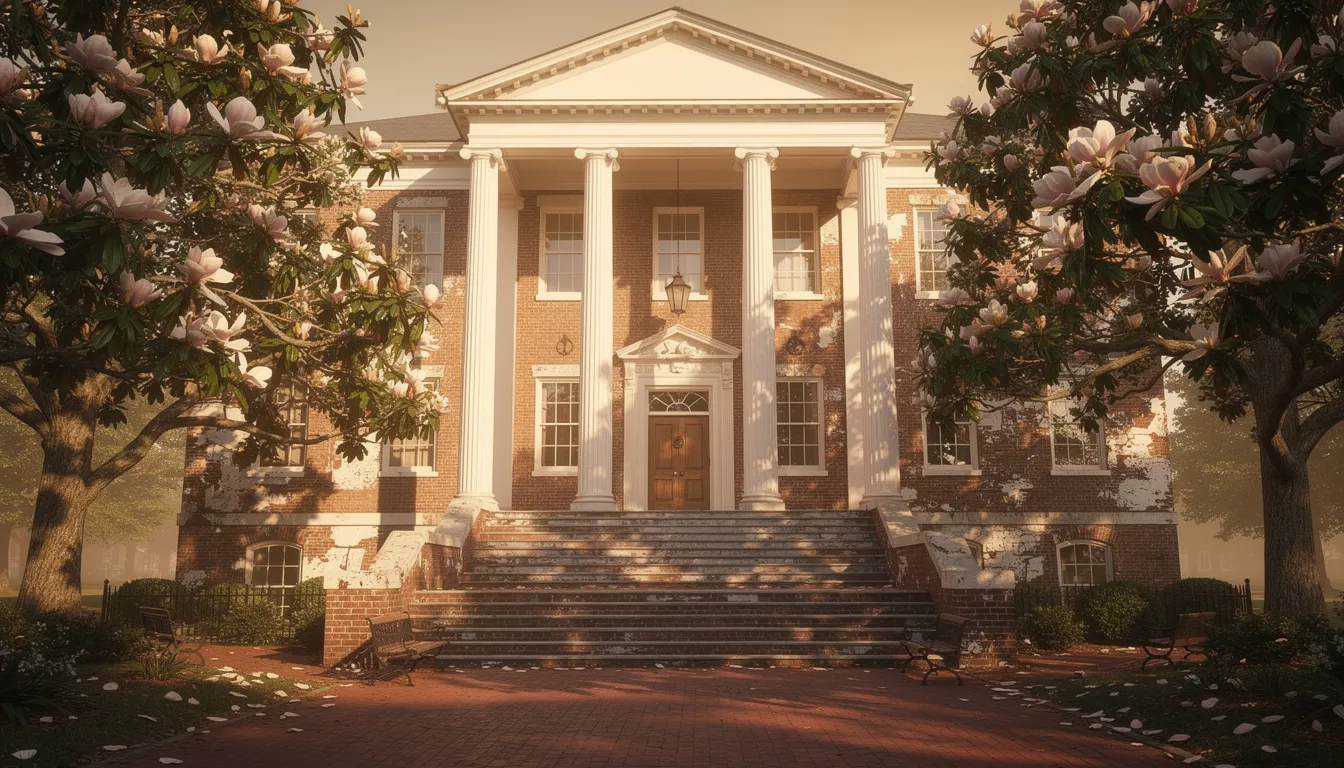
If you grew up in Alabama, or you're an out-of-state family looking in, the phrase "college in Alabama" probably conjures one of two pictures: a packed football stadium on a Saturday in Tuscaloosa or Auburn, or a quiet two-year campus where a neighbor's kid knocked out gen-eds for cheap before transferring. Both pictures are true, and both are incomplete. Alabama's higher-education landscape is more layered than its two flagship rivalries suggest, and picking the right fit inside it means understanding a few things that are genuinely specific to this state — not just generic "how to choose a college" advice with an Alabama flag stuck on top.
This guide walks through what's actually on the ground in Alabama right now, what makes choosing a school here different from choosing one in, say, Ohio or Colorado, and how to work through the decision methodically instead of defaulting to whichever school your cousin went to.
The Alabama Higher Ed Landscape, As It Actually Stands
The two flagships. The University of Alabama in Tuscaloosa is the largest school in the state by a wide margin, enrolling roughly 42,000 students in fall 2025, including about 36,000 undergraduates. In-state tuition sits around $11,700-$12,500 a year depending on how fees are counted, after a 2.67% increase built into the 2025-2026 academic year. Auburn University, about two and a half hours southeast, is the other flagship-tier option, with close to 28,000 undergraduates and in-state tuition and fees of roughly $13,268 for 2025-26 following a 3% board-approved increase. Both are massive, both play in the SEC, and both come with an athletics-and-tradition culture that shapes daily campus life as much as academics do.
UAB, the fastest riser. The University of Alabama at Birmingham is a different animal — a research and medical powerhouse embedded in Alabama's largest city, with strong programs in health sciences, engineering, and business. UAB posted around 20,900 total students in 2024-25 and was tracking toward its largest-ever freshman class for fall 2025, with early counts suggesting close to a 25% jump in first-time freshmen. If you want a flagship-caliber research environment without the small-town, football-first atmosphere, UAB is worth serious consideration.
The regional and comprehensive publics. Troy University (about 13,700 students, with a large adult and online population), the University of South Alabama in Mobile (roughly 14,000 total students, strong in health sciences and coastal/marine programs), and the University of North Alabama in Florence (around 10,200 students) round out the mid-size public options. Each has a distinct regional pull — South Alabama toward the Gulf Coast, North Alabama toward the Shoals and Huntsville's tech corridor, Troy toward military-adjacent and online learners.
Alabama's HBCUs. Alabama A&M University in Huntsville just posted its third consecutive year of record enrollment, hitting 7,808 students in fall 2025 — the largest class in its 150-year history — and is officially the state's largest HBCU. Alabama State University in Montgomery, one of the nation's oldest HBCUs, enrolled about 4,081 students in fall 2024. Both offer a different cultural and community experience than the majority-white flagships, and both have deep institutional histories tied to the civil rights movement.
Private schools. Samford University in Birmingham is the major private player left standing, hitting 6,324 students in fall 2025 with tuition and fees around $40,150 a year before aid. If you're researching Birmingham-Southern College, note that it closed permanently at the end of the 2023-24 academic year after prolonged financial trouble, and as of mid-2025 its campus still sat unsold with no finalized buyer — so it is not an option for prospective students despite older references you may still find online.
Community colleges. The Alabama Community College System (ACCS) runs 24 public two-year institutions across more than 130 locations statewide, and average in-state tuition runs around $4,400 a year — a fraction of what any four-year school charges. This is the piece of the puzzle a lot of families underrate.
What Actually Makes Choosing a College in Alabama Different
In-state tuition is a real lever, not a footnote. The gap between Alabama resident tuition and out-of-state or private tuition is substantial — Auburn's out-of-state undergraduates pay roughly $35,972 in total tuition and fees versus $13,268 for residents, and similar multiples show up at South Alabama and North Alabama. If you're an Alabama resident, that gap alone should push flagship and regional public schools higher on your list before you seriously price out private or out-of-state options.
The two-year-to-four-year pathway is unusually well organized. Alabama runs a statewide articulation system — originally called STARS, now branded Alabama Transfers — coordinated by the Alabama Articulation and General Studies Committee. It gives community college students a transfer guide for their intended major so credits from a public two-year college map cleanly onto a four-year degree plan at a public university, without the credit-loss horror stories you hear about in less coordinated states. ACCS also has a separate articulation agreement with the Alabama Association of Independent Colleges and Universities, extending similar credit protection toward private schools. Practically, this means starting at a community college like Jefferson State, Calhoun, or Central Alabama and transferring into UA, Auburn, UAB, or South Alabama is a well-worn, well-supported path — not a workaround.
Regional accreditation (SACSCOC) is the baseline check, and it matters more than people realize. Every public university and community college named here is accredited through the Southern Association of Colleges and Schools Commission on Colleges. SACSCOC accreditation is what keeps a school eligible for federal financial aid (Title IV funds) and is generally what other universities and employers check before accepting your transcript at face value. It's not a ranking or a prestige marker — it's a floor. If a school you're considering, especially a smaller private or for-profit option, can't clearly point to current SACSCOC status, that's a real red flag, not a minor paperwork issue.
Climate, culture, and football aren't just lifestyle add-ons — they shape the day-to-day. Alabama's climate is hot and humid for a good chunk of the school year, with mild winters; that affects everything from dorm life to whether outdoor recreation is a year-round or seasonal thing. And at the two flagships in particular, Greek life and football are structural, not incidental. At the University of Alabama, more than 13,000 students — around 40% of the main-campus undergraduate population — are in a fraternity or sorority, and UA runs the largest Panhellenic sorority recruitment in the country. Auburn isn't far behind, with Greek organizations representing roughly 35-37% of undergraduates. If that kind of social infrastructure sounds appealing, it's a major asset. If it sounds like exactly what you want to avoid, UAB, Troy, South Alabama, or the HBCUs offer a noticeably different social center of gravity.
The Common Misconception: "Alabama Schools Are All Alike"
The biggest misconception out-of-state families (and even some in-state families) bring into this search is that "an Alabama public university" is a single, interchangeable category — that UA, Auburn, UAB, Troy, South Alabama, North Alabama, Alabama A&M, and Alabama State are basically the same experience with different mascots. They are not.
UA and Auburn are large, residential, football-and-Greek-life-centered flagships drawing heavily from in-state and a fair amount of out-of-state enrollment. UAB is urban, research- and health-sciences-heavy, and commuter-friendlier. Troy leans into adult, military, and online learners as much as traditional undergrads. South Alabama and North Alabama serve strong regional identities tied to Mobile's coast and the Shoals/Huntsville corridor, respectively. Alabama A&M and Alabama State are HBCUs with distinct histories, traditions, and communities that are not smaller versions of the flagships — they're their own thing entirely, with their own bands, homecoming culture, and alumni networks.
The second half of this misconception is assuming a two-year college is a "lesser" starting point. Given how deliberately Alabama built its two-to-four transfer system, starting at a community college and transferring in junior year with your gen-eds paid for at a quarter of the cost isn't a consolation prize — for a lot of students, especially those still choosing a major, it's the financially smarter route into the exact same junior-and-senior-year experience at UA, Auburn, or UAB.
A Practical Framework for Narrowing It Down
Start with major and program strength, not brand name. If you know you want nursing, marine sciences, or health-related fields, South Alabama's coastal location and health-sciences focus deserve a hard look. If it's engineering or STEM research, UAB and Auburn both have real depth. If you're drawn to agriculture, forestry, or veterinary-adjacent programs, Auburn's roots run deep there. Business, education, and pharmacy show up strong at Samford and Auburn alike. Don't pick the school first and hope the major works out — check the specific department's size, faculty, and internship pipeline.
Run the real cost math, not the sticker price. Compare in-state tuition at your top public choices against any private school's list price minus expected aid, and factor in whether a semester or two at a community college first would meaningfully cut your total four-year cost. Alabama's average federal student loan debt sits around $37,800-$39,000, close to the national average, so it's worth being deliberate here rather than assuming any in-state public school is automatically "cheap enough." Look into the Alabama Student Grant Program (for eligible independent-college students) and the Alabama Student Assistance Program (need-based, tied to Pell eligibility) as state-level aid layered on top of federal aid.
Weigh campus culture honestly, including how big or small you want that culture to be. A 40,000-student football school and a 4,000-student HBCU are not "sizes of the same thing" — they produce genuinely different daily experiences. Visit if you can, and if you can't, look at first-year retention data, Greek life participation rates, and whether the school is majority-residential or majority-commuter, because that shapes weekends as much as classes do.
Location within the state matters more than it seems on a map. Alabama isn't huge, but Huntsville's tech-and-aerospace economy, Mobile's port-and-coastal economy, Birmingham's medical and finance sector, and Montgomery's government and HBCU legacy are genuinely different regional identities. Where you go to school often quietly becomes where your first internship and job leads come from.
FAQ
Is the University of Alabama or Auburn "better"? Neither is objectively better — they're close peers academically, both SEC flagships with strong in-state tuition rates for residents. The real differentiators are program strength in your intended major, campus size and feel, and which culture (both are Greek-life- and football-heavy, but with different flavors) fits you.
Is Birmingham-Southern College still an option? No. It closed permanently at the end of the 2023-24 academic year due to financial insolvency, and as of mid-2025 its campus remained unsold with no finalized buyer. Cross it off any list you're working from if it appears in older guides.
Can I really save money by starting at an Alabama community college? Yes. Average in-state community college tuition in Alabama runs around $4,400 a year, versus $11,000-plus at public four-years and far more at private schools, and the Alabama Transfers (formerly STARS) articulation system is specifically built to move those credits into a four-year degree plan without loss.
Do I need to worry about accreditation at Alabama's public schools? Every public university and every ACCS community college listed here holds SACSCOC regional accreditation, which is what keeps them eligible for federal financial aid and keeps your credits transferable. It's worth confirming for any smaller private or specialty school you're considering that isn't covered in this guide.
How big a deal is Greek life if I'm not interested in it? At UA and Auburn, Greek life is genuinely central to social life for a large share of students — around 35-40% of undergraduates are members — so if it's not for you, it's worth weighing UAB, Troy, South Alabama, North Alabama, or the HBCUs, where it's a smaller piece of the social fabric.
What if I'm coming from out of state? Budget carefully — out-of-state tuition at Auburn runs close to $36,000 a year in tuition and fees alone, multiples of the in-state rate, and similar gaps show up at the other publics. Out-of-state students should look hard at merit scholarships each school offers before assuming the sticker price is the real price.
Sources
- Birmingham-Southern College remains closed as neighbors hope for new life on campus
- University of Alabama System Announces Tuition Increases for 2025-2026 Academic Year
- Auburn University Board of Trustees raises tuition 3% for 2025-26 school year
- UAB Anticipates Record-Breaking Freshman Enrollment for Fall 2025
- What is Alabama Transfers? · Alabama Transfers
- 2-to-4 Transfer – Alabama Community College System
- Troy University - Profile, Rankings and Data | US News Best Colleges
- Alabama A&M Reaches Record Enrollment for Third Consecutive Year
- Alabama State University - Profile, Rankings and Data | US News Best Colleges
- Tuition and Fees | University of South Alabama
- University of North Alabama Tuition, Cost of Attendance & Scholarships
- Undergraduate Tuition and Fees | Samford University
- FAQs - SACSCOC
- Alabama Community College System
- Student Loan Debt by State [2026]: Average + Total Debt
- Alabama Community Colleges By Tuition Cost (2026-27)
- Fall 2025 Greek Scorecard - Fraternity & Sorority Life | The University of Alabama
- Auburn Greek Life Releases 2025-2026 Community Report
- Alabama Student Grant Program - Alabama Commission on Higher Education

