How to Choose the Right College in Alaska
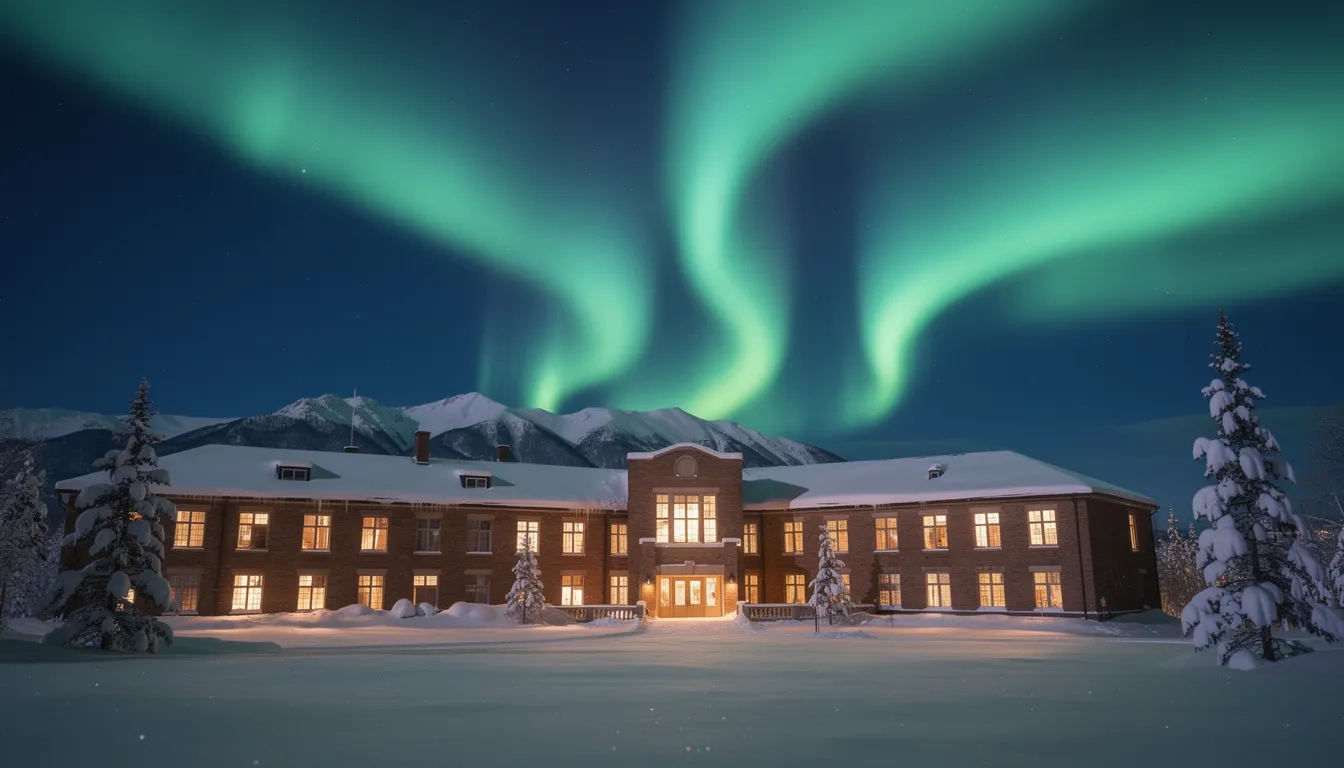
If you're sitting in Anchorage, Wasilla, Juneau, or Bethel trying to map out where to apply, you already know the math looks different here than it does for a family in Ohio or North Carolina. Alaska doesn't have forty four-year colleges to sort through. It has a small handful, spread across a state one-fifth the size of the entire Lower 48, and a lot of students end up looking Outside (that's the local term — anywhere that isn't Alaska) almost by default. Neither path is automatically the smart one. This guide walks through what's actually here, what makes Alaska a genuinely unusual place to choose a college, and how to think through the in-state-versus-Outside decision without guessing.
Alaska's higher education landscape, in plain terms
Nearly everything public runs through one system: the University of Alaska, which has three separately accredited universities plus a scattering of rural community campuses.
University of Alaska Anchorage (UAA) is the system's largest campus and the state's population and economic hub. It's grown fastest lately — Alaska Public Media reported UAA logged a roughly 6% jump in total enrollment for fall 2025, its biggest one-year gain in over a decade, with the community and technical college and education programs driving much of it. UAA also runs an extended network of community campuses — Kenai Peninsula College (Soldotna, Homer), Kodiak College, Matanuska-Susitna College in Palmer, and Prince William Sound College serving Valdez, Cordova, and Glennallen — which matters if you want to stay close to home on the Kenai or in the Mat-Su Valley rather than moving into Anchorage proper. UAA also runs a WWAMI medical education partnership and 3+3 accelerated law tracks with the University of Washington and Willamette, so "no in-state law or med school" isn't quite the whole story.
University of Alaska Fairbanks (UAF) is smaller — about 6,893 students as of fall 2024, split between roughly 5,800 undergraduates and 1,066 graduate students — but it's the system's research engine, holding land-grant, sea-grant, and space-grant status and generating more than 90% of all UA system research. UAF also has its own web of rural extended campuses (Bristol Bay in Dillingham, Chukchi in Kotzebue, Kuskokwim in Bethel, Northwest in Nome, and the Interior Alaska Campus), which is often the only realistic in-person college access point for students from remote parts of the state.
University of Alaska Southeast (UAS) covers the Panhandle out of Juneau, with additional campuses in Sitka and Ketchikan. UAS is genuinely small — enrollment in the 1,000-2,000 range — and it blends community-college-style programs with bachelor's and graduate degrees at a single institution. Each campus has a distinct flavor: Juneau is the residential hub, Ketchikan houses the UAS Maritime Training Center for technical and nautical training, and Sitka is known for applied fisheries, aquaculture, and scientific diving.
Outside the UA system, Alaska Pacific University (APU) in Anchorage is the state's one private, four-year option — small (437 undergraduates as of fall 2023), Methodist-affiliated, with an unusually open 96% acceptance rate and tuition around $20,760. APU leans into programs you won't find replicated at UAA or UAF, like Alaska Native Governance, Outdoor Studies, and Marine & Environmental Sciences, alongside nursing and business.
For students who want workforce training rather than a traditional degree track, two options matter. AVTEC (Alaska's Institute of Technology), run by the state in Seward, offers hands-on certificate programs in fields like diesel and heavy equipment technology, welding, industrial electricity, culinary arts, and maritime training, with roughly 70% of instructional time spent in labs rather than lecture halls and an 82% graduation rate. And Iḷisaġvik College in Utqiaġvik is Alaska's only tribal college and the northernmost accredited college in the country, offering Iñupiaq studies, allied health, and construction programs to about a thousand students in person and remotely, with tuition waivers for Alaska Natives, American Indians, Elders, and North Slope Borough residents. The college recently purchased land for a long-planned new campus, replacing facilities scattered across a decommissioned naval base.
What actually makes choosing a college in Alaska different
The list is short, and that's the point, not a flaw. In most states, "in-state options" means dozens of public and private schools of every size and specialty. In Alaska it means, realistically, three UA campuses, one private university, a tribal college, and a state vocational center. That's not a knock on quality — it just means the usual "narrow it down from 50 schools" exercise doesn't apply. The real work is figuring out early whether Alaska's in-state list can actually cover what you want to study, because if it can't, your search is Outside by necessity, not preference.
Remoteness and climate are academic decisions, not just lifestyle ones. Winter darkness in Fairbanks, the cost and logistics of flying home from Bethel or Kotzebue, and the sheer distance between campuses (Juneau isn't reachable by road from anywhere else in the state) shape day-to-day college life in a way that doesn't show up on a comparison spreadsheet. A student who thrives on a walkable, snowy campus in Fairbanks might struggle with Juneau's isolation from the road system, and vice versa. Visit if you can, or at least talk to current students, before assuming "Alaska" is one interchangeable experience.
Alaska's signature academic strength is genuinely hard to replicate elsewhere. UAF's Geophysical Institute (founded 1946) and International Arctic Research Center put students and undergrads alongside scientists studying permafrost, sea ice, the aurora, and volcanic and seismic activity — work that depends on being physically close to the Arctic system being studied. The College of Fisheries and Ocean Sciences runs labs from the Seward Marine Center to Kasitsna Bay (co-managed with NOAA) to a fisheries lab at Lena Point in Juneau, and offers dedicated bachelor's and graduate tracks in fisheries, marine biology, and oceanography. UAS Sitka's applied fisheries, aquaculture, and scientific diving programs and Ketchikan's Maritime Training Center round out a state where "go into fisheries or ocean science" is a mainstream, well-supported major rather than a niche one. If your intended field lines up with any of this, Alaska stops being a "small state with few options" and becomes one of the strongest places in the country to study it.
A lot of Alaska students leave, and the reasons are practical, not just wanderlust. A federal research brief tracking 2005 Alaska high school graduates found that among those who left the state for college, Washington, Oregon, Arizona, and California were the most popular destinations — not coincidentally, all Western Undergraduate Exchange states. That pattern still holds because of one financial lever: WUE lets residents of participating Western states (Alaska included) enroll at another member institution for no more than 150% of that school's resident tuition, according to WICHE, which administers the program. For an Alaska family staring down full nonresident tuition at a school Outside, a WUE seat can cut the sticker price dramatically — assuming the specific major is designated as WUE-eligible at that specific school, which isn't guaranteed and needs to be checked program by program, not just campus by campus.
Alaska tuition itself is in the middle of an unusual, favorable shake-up right now. The University of Alaska Board of Regents voted 10-0 in August 2026 to eliminate the nonresident tuition surcharge system-wide, meaning out-of-state, international, and WUE students at UAA, UAF, and UAS will all pay the same rate as Alaska residents starting fall 2027, according to Alaska Beacon and Alaska's News Source. UAS already rolled this out early under the name "Alaska Unlocked," effective fall 2026, making it the first UA campus where residency essentially stops affecting your tuition bill at all. Regents cited both administrative simplicity — 85% of nonresident students were already receiving waivers or discounts under the old system — and a workforce argument, noting that roughly 75% of out-of-state students who enroll in Alaska stay in the state long-term after graduating. Practically, this means the traditional "Alaska is affordable for residents, expensive for everyone else" framing is already outdated for UAS and will be outdated system-wide within a couple of years, which is worth knowing before anyone rules out UAA or UAF on the assumption that nonresident tuition is untouchable.
The common misconception: "Alaska schools are a fallback, not a real choice"
The most persistent myth among Alaska families is that the UA system is what you settle for if you can't afford or don't get into something Outside. That gets the actual trade-offs backwards in several ways. First, UAF's Arctic and fisheries research isn't a smaller version of what's available elsewhere — for those specific fields, it's often the more prestigious, more resourced option, not the consolation prize. Second, in-state tuition at a UA campus is still meaningfully cheaper than most nonresident sticker prices even before the 2027 changes finish rolling out, and the Alaska Performance Scholarship — worth up to $4,755 a year for eligible residents attending an Alaska school or approved career/technical program, per the Alaska Commission on Postsecondary Education — only stacks on top of in-state pricing. Third, "small" doesn't mean "limited" once you factor in APU's specialty majors, AVTEC's direct-to-workforce technical training, and Iḷisaġvik's tuition-waiver programs. The real question isn't which option ranks higher in the abstract; it's whether a given school's actual strengths match what the student wants to do.
A framework for weighing in-state vs. out-of-state
Work through these in order rather than starting with cost, which tends to distort the earlier questions.
- Does your intended major exist meaningfully in Alaska? Not just "is there a program with this name," but does it have the labs, faculty, and internship pipeline you'd want. This is where UAF's Arctic and marine science strength, or APU's outdoor/environmental focus, can outperform a generic major at a much larger Outside school.
- How much does proximity to family and the Alaska job market matter to you? If you plan to work in Alaska after graduation — fisheries, oil and gas, healthcare, K-12 education, tribal governance — building your network and internships in-state has real long-term value that's easy to underweight at 17.
- Price it out with the current rules, not old assumptions. Get real numbers for in-state tuition (UA System lists lower-division resident rates around $251 per credit for 2026-2027, versus roughly $875 per credit for nonresidents under the old structure) against a WUE-adjusted or Alaska Unlocked-adjusted price at your Outside targets. The gap has narrowed fast, and modeling last year's assumptions will give you the wrong answer.
- Factor in scholarships that only apply to specific paths. The Alaska Performance Scholarship requires attending an Alaska institution; some out-of-state merit aid requires the opposite. Run both scenarios before deciding either one is "obviously cheaper."
- Be honest about climate and distance fit. A semester in Fairbanks at -20°F or a Juneau winter with no road out of town is a real daily experience, not a footnote — talk to current students in your intended program, not just admissions staff, before committing.
- Keep vocational and tribal-college paths on the table if they fit. AVTEC and Iḷisaġvik aren't fallback options either — they're the direct route into skilled trades, maritime careers, and specific cultural/technical fields that a four-year degree doesn't necessarily deliver faster or better.
Frequently asked questions
Is University of Alaska Fairbanks or University of Alaska Anchorage the "better" school? They're not really competing for the same student. UAF is the system's research-heavy campus, strongest for Arctic science, geophysics, fisheries, and marine biology, with a smaller, more residential feel. UAA is larger, more urban, and stronger for programs tied to Anchorage's economy — business, aviation, nursing, education, and its WWAMI medical and 3+3 law pipelines. The right pick depends on major and setting preference, not a general ranking.
Does Western Undergraduate Exchange (WUE) apply to Alaska residents leaving the state, or to out-of-state students coming in? Both. WUE is a reciprocal agreement among 15 Western states and territories including Alaska. An Alaska resident can use WUE to get reduced tuition (up to 150% of resident rates) at a participating school in another member state, and a student from another WUE state can use it to get reduced tuition at UAS. Eligibility is set program-by-program at the receiving school, so confirm your specific major qualifies.
Is it true that out-of-state students at Alaska schools will pay the same as residents? It's becoming true. UAS already implemented this under its "Alaska Unlocked" initiative starting fall 2026. The full UA System Board of Regents voted in August 2026 to eliminate the nonresident tuition surcharge at UAA and UAF as well, effective fall 2027. Until that date, UAA and UAF still charge separate resident and nonresident rates, so check current-year pricing directly.
What if I want to study something Alaska schools don't offer at all? That's a legitimate reason to look Outside, and it happens most often with highly specialized majors, large-scale performing arts programs, or fields requiring facilities Alaska's small system doesn't have the population base to support. In that case, prioritize WUE-eligible schools in neighboring Western states to keep the cost gap manageable.
Are there real vocational or technical alternatives to a four-year degree in Alaska? Yes. AVTEC in Seward offers state-run certificate training across 16 technical fields — from welding and diesel technology to culinary arts and maritime training — with hands-on labs making up most instructional time. It's a legitimate, often faster route into skilled trades that pay well in Alaska's economy.
Does the Alaska Performance Scholarship cover any Alaska school, including private and technical ones? It can be used at UA System campuses, Alaska Pacific University, and approved career and technical education programs in the state, not just the public university system. Award amounts depend on the academic tier a student qualifies for and require an on-time FAFSA each year.
Sources
- Cost of Attendance | University of Alaska System
- UA Board of Regents moves to cut tuition for out-of-state students, aiming to boost enrollment | Alaska Beacon
- University of Alaska board votes to eliminate out-of-state tuition surcharge
- Alaska Unlocked: In-state tuition for everyone, regardless of residency | UAS
- Western Undergraduate Exchange | UAS Catalog
- Western Undergraduate Exchange (WUE) | Save On Tuition | WICHE
- Institute of Marine Science | College of Fisheries and Ocean Sciences, UAF
- Fisheries and Marine Sciences B.S. | UAF Catalog
- International Arctic Research Center | UAF Catalog
- Geophysical Institute | UAF Catalog
- University of Alaska Fairbanks | Wikipedia
- University of Alaska Anchorage | Wikipedia
- Get to Know UAS | University of Alaska Southeast
- Alaska Pacific University | Wikipedia
- Iḷisaġvik College
- Utqiaġvik's tribal college has bought land to build its long-planned campus | Alaska Public Media
- About | AVTEC - Alaska's Institute of Technology
- Alaska Performance Scholarship (APS) | Alaska Commission on Postsecondary Education
- Bucking national trend, University of Alaska Anchorage sees highest enrollment increase in years | Alaska Public Media
- Where are students moving to attend college? | USAFacts
- Catching up: Researchers track 6,000 Alaskans' paths after their 2005 high school graduations | Alaska Beacon

