The Questions to Ask on a College Tour That Actually Matter
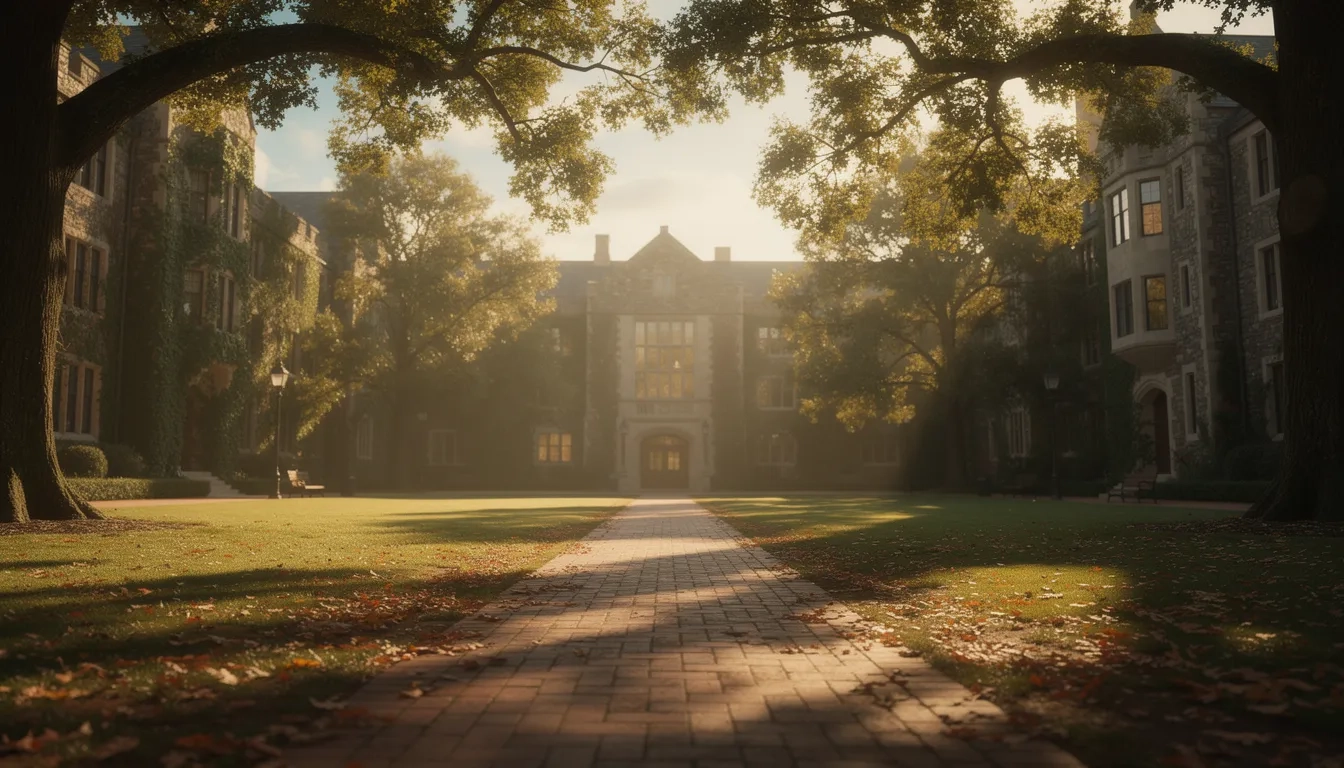
Most kids come home from a college tour and say the same thing: "It was nice." That's it. That's the whole report. The reason is almost always the same — they spent 90 minutes walking backward through a quad listening to a 20-year-old talk about the dining hall's stir-fry station, and never asked a single question that couldn't be answered by the admissions website.
A campus tour is one of the only times you get an actual human being, paid to be honest-ish, standing in front of you for an hour. Waste that on questions Google already answered and you've wasted the whole trip. Here's how to spend it better.
Do This Homework Before You Show Up
The quality of your questions on tour day is directly proportional to how much boring background reading you did the night before. Spend 20 minutes on the school's course catalog, the common data set (most schools publish one — search "[school name] common data set" and you'll find retention rates, class-size breakdowns, and financial aid stats that would otherwise burn your whole tour just to extract), and the student newspaper's archive. The student paper especially is underused: it's where you'll find the actual campus controversies — a housing shortage, a dining contract dispute, a program getting cut — that no tour guide will volunteer but will happily discuss if you ask about it directly.
This matters because it changes the level of question you can ask. "What's the meal plan like?" is a homework-free question. "I read that the dining hall contract changed last year — has that affected food quality or hours?" is a question that gets you a real, specific, off-script answer, and it signals to whoever's talking to you that you've actually done due diligence, which tends to get you a more candid response in return.
Ask the Tour Guide Things Only a Student Would Know
Your guide is a current student, not a spokesperson (even though they've been trained a little like one). The best questions get at lived experience, not marketing copy.
Tufts admissions, in its own blog for prospective students, suggests guides tend to light up when asked "How did you pick your major?" — because it opens into a real conversation about advising and support, not a rehearsed pitch. Try these instead of "What do you love about this school?" (a question every guide has answered 500 times and has a canned answer for):
- "What's something you wish you'd known before you enrolled?"
- "How do you and your friends actually spend a Tuesday night?"
- "What's the one class everyone tries to get into?"
- "How do you handle the winter here?" (genuinely useful if you're from Arizona touring a school in Minnesota)
- "What's your #1 complaint about this place?"
That last one, straight from The Princeton Review's list of 60 tour questions, is the single best gut-check question that exists. A guide who can't name a complaint in five seconds is either extremely happy or not being straight with you. Both are useful data.
"Asking lots of questions is a great way to learn about schools beyond the glossy college brochures or glowing admission websites." — The Princeton Review
Academics: Go Past "What's the Class Size?"
Everyone asks about class size. Fine, ask it — the College Board's BigFuture resource lists it as a top question for a reason, since a school claiming a 15:1 student-to-faculty ratio can still stuff 300 students into Intro to Psychology. But class size alone tells you almost nothing about whether you'll actually talk to a professor.
Push into registration mechanics instead, since that's where most students get quietly screwed:
| Question | What it actually reveals |
|---|---|
| "How hard is it to get into required courses?" | Whether you'll graduate in 4 years or 5 |
| "Do professors or TAs teach discussion sections?" | Real access to faculty vs. a grad student |
| "Can I double major or add a minor without extra time?" | Curriculum flexibility |
| "What happens if I want to change majors sophomore year?" | Bureaucratic friction (or lack of it) |
| "Who advises undeclared students?" | Whether "undecided" is actually supported |
A school can have a gorgeous 8:1 ratio and still make it nearly impossible to register for organic chemistry before your senior year — that's a scheduling and capacity problem the ratio never tells you about. This is a real, common failure mode: pre-med and nursing programs in particular are notorious for capping lab sections, which means a strong student who registers a day late can get bumped a full year off their intended graduation timeline. Ask a current student, not just the tour guide, whether they got into their first-choice classes freshman year, and if not, what the school did about it.
It's also worth asking about study-abroad and research access specifically, since these are the two academic offerings that vary the most between schools with similar rankings. "What percentage of students study abroad, and does financial aid travel with them?" and "Can freshmen or sophomores get into paid research positions, or is that reserved for juniors and seniors?" will tell you more about a school's actual academic culture than any ranking number.
Money Questions You're Allowed to Ask (and How)
Here's a place people freeze up: nobody wants to ask about money in front of a group of 40 strangers on a tour. You don't have to. Financial aid conversations belong in a scheduled meeting, not shouted across a quad.
CollegeXpress's campus-visit guide flags this directly — financial aid staff "really don't like it when students put them on the spot" with individual scenarios in a group setting. Instead:
- Book a 1-on-1 with the financial aid office ahead of your visit (most schools let you schedule this online).
- Ask general policy questions on the group tour: "What percentage of students receive need-based aid?" or "Do you offer merit scholarships that don't require a separate application?"
- Save your specific numbers ("My family makes $87,000 — what would I actually pay?") for the private meeting, or better, run the school's official net price calculator before you even show up.
That third step matters more than people think. A school with a $62,000 sticker price and a school with a $31,000 sticker price can land at the exact same number after aid — the sticker price is often theater. Ask the financial aid office point-blank: "What's your average net price for a family in my income bracket, and is merit aid stackable with need-based aid?" Also ask whether aid packages are renewable at the same level for all four years, or whether they tend to shrink after freshman year — some schools front-load merit aid to win a commitment, then quietly reduce it, which is the kind of detail you will never see on a glossy brochure but will absolutely find in a direct one-on-one conversation.
Campus Life: The Stuff That Actually Determines If You'll Be Happy
This is where most tours are strongest and where students ask the weakest questions. "Is the food good?" gets you nothing. Ask about the friction points instead — the small daily annoyances that either make a campus livable or make you miserable by October.
- "What's the worst thing about the dorms?" (not "are the dorms nice")
- "How do you get from the dorms to your first class if it's raining/snowing?"
- "Is there a lottery for housing after freshman year, and who tends to lose it?"
- "Where do students go when they're stressed or just need quiet?"
- "What happens on a typical weekend if you don't drink or aren't in Greek life?"
That last one is the quiet litmus test. Ivy Coach, an admissions consulting firm, is refreshingly blunt about this in its own tour advice: colleges don't actually track which questions you ask, so there's no strategic advantage to sounding sophisticated. Ask what you actually want to know. Their line — "don't attend your tour with hidden agendas, it will just backfire" — is the elephant in the room nobody else says out loud: tours aren't an audition. Relax.
Don't Skip: Safety, Health, and Support Services
These questions get overlooked because they're less fun to ask than "what's the social scene like," but they matter more than almost anything else on this list once you're actually enrolled. CollegeXpress's campus-visit guide groups health and wellness services as its own dedicated category for exactly this reason.
- "What's the average wait time to get a first appointment at counseling services?" — Some schools quote this proudly because it's under a week; others will dodge the question because it's closer to a month, which matters enormously if you're managing anxiety, depression, or any ongoing mental health condition.
- "How does campus security work at night, and is there a safe-walk or shuttle service?"
- "If I have a documented learning difference or disability, what does the accommodations process actually look like, and who do I talk to first?"
- "What happens if I get sick and need to miss a week of classes — is there a formal process, or is it up to each professor?"
If you're a first-generation college student, it's also worth asking directly: "What specific programs exist for first-gen students, and are they optional or built into orientation?" Schools vary wildly here — some have a dedicated first-gen center with year-round programming, others have a single welcome event and nothing after. The gap between those two matters far more than U.S. News ranking once you're three weeks into your first semester and don't know how to read a syllabus, register for classes, or use office hours.
Career Services and Life After Graduation
Sixteen-year-old you doesn't care about this. Employed-at-22 you cares a lot. The gap between a school's brand name and its actual outcomes machinery can be huge.
Some schools with modest name recognition run career centers that get 90%+ of grads into jobs or grad school within six months. Some schools with famous names have a career office that's basically a bulletin board. Ask:
- "What percentage of students do at least one internship before graduating?"
- "Does the career center help with internship searches, or just resume review?"
- "How involved are alumni in hiring current students?"
- "Can I see employment outcome data by major, not just school-wide?"
Notre Dame's admissions office and dozens of other schools now publish first-destination surveys — ask for the one specific to your intended major, not the school-wide average, since a 95% placement rate in Computer Science can hide a 60% rate in Art History at the same institution.
Questions That Actually Cross a Line
A few things burn goodwill fast, according to both CollegeXpress and Ivy Coach's tour guidance:
- Asking your tour guide to predict your admissions odds (they have no idea, and it puts them in a bad spot)
- Asking financial aid staff for a personalized award estimate in front of a group
- Grilling the guide on rankings and prestige comparisons ("Are you better than [rival school]?")
- Asking anything you could've answered with 30 seconds on the school's own website
None of these get you kicked off the tour. They just mark you as someone who didn't do the 10 minutes of homework everyone else did.
How to Prioritize When Time Is Short
Most tours run 60 to 90 minutes and you'll get maybe three or four chances to ask a question the whole group can hear, plus a handful of side conversations if you linger afterward. Don't try to cover every category above in one visit — pick based on what would actually change your decision, not what sounds impressive. A useful way to triage: ask yourself "if the answer to this is bad, does it eliminate the school?" Registration bottlenecks in your intended major, a genuinely unsafe-feeling campus, or an unaffordable net price are decision-changing. Dining hall variety and dorm carpet color are not. Spend your limited live-human time on the former and let the website answer the latter.
Bottom Line
- Save the Google-able questions. Class size, tuition, and majors offered are on the website. Use your live human for things only a current student can tell you.
- Ask "what's the worst part" of the dorms, the dining, the location — every place has one, and the answer tells you more than any highlight reel.
- Handle money privately. Book a 1-on-1 with financial aid and run the net price calculator before you go; don't put staff on the spot in a group setting.
- Get major-specific outcome data, not school-wide averages, when asking about career services.
- Don't skip health, safety, and support services — wait times for counseling and the accommodations process matter more day-to-day than almost anything else on this list.
- Relax about strategy. Nobody at the school is grading your questions. Ask what you actually want to know.
Frequently Asked Questions
Do admissions officers track what questions I ask on a tour?
No. Tour guides are current students, not admissions staff, and there's no back-channel reporting your questions to the admissions committee. What does register as demonstrated interest is the act of showing up — attending the tour, an info session, or an interview.
What's the biggest mistake students make on a college tour?
Sticking to safe, generic questions like "Is the food good?" instead of asking about friction points — housing lotteries, registration bottlenecks, or what students do on weekends if they're not into Greek life. Vague questions get vague, useless answers.
Should I ask about financial aid during the group tour?
Ask general policy questions in the group ("What percentage of students get merit aid?") but save personal numbers for a scheduled 1-on-1 with the financial aid office. Financial aid staff are not going to give you a real, personalized figure in front of 40 strangers, and it's an uncomfortable ask for everyone.
How many questions should I actually plan to ask?
Pick 5 to 8 that matter most to you rather than trying to cover every category. CollegeXpress's guide makes this point well: you won't have time to ask everything, so prioritize the questions where the answer would actually change your opinion of the school.
Is it worth talking to random students, not just the assigned tour guide?
Yes, and it's arguably more valuable. Tour guides are trained and generally happy with their school (that's often why they're guides). A student you stop in the dining hall or library has no script and will usually give you a more unfiltered answer.
What if the tour guide doesn't know the answer to my question?
That's fine, and it's honestly a good sign if they say so rather than guessing. Follow up by emailing the admissions office or the specific academic department later; most schools list a department contact who can give you a precise answer.
Sources
- 60 Questions To Ask on Your College Tour | The Princeton Review
- Questions to Ask Your College Tour Guide | Tufts Admissions
- What are good questions to ask on a college tour? | BigFuture, College Board
- 20+ Questions to Ask on College Tours | Ivy Coach
- Essential Campus Visit Questions: The Ultimate List for Students | CollegeXpress

