Should You Choose a College for Its Sports
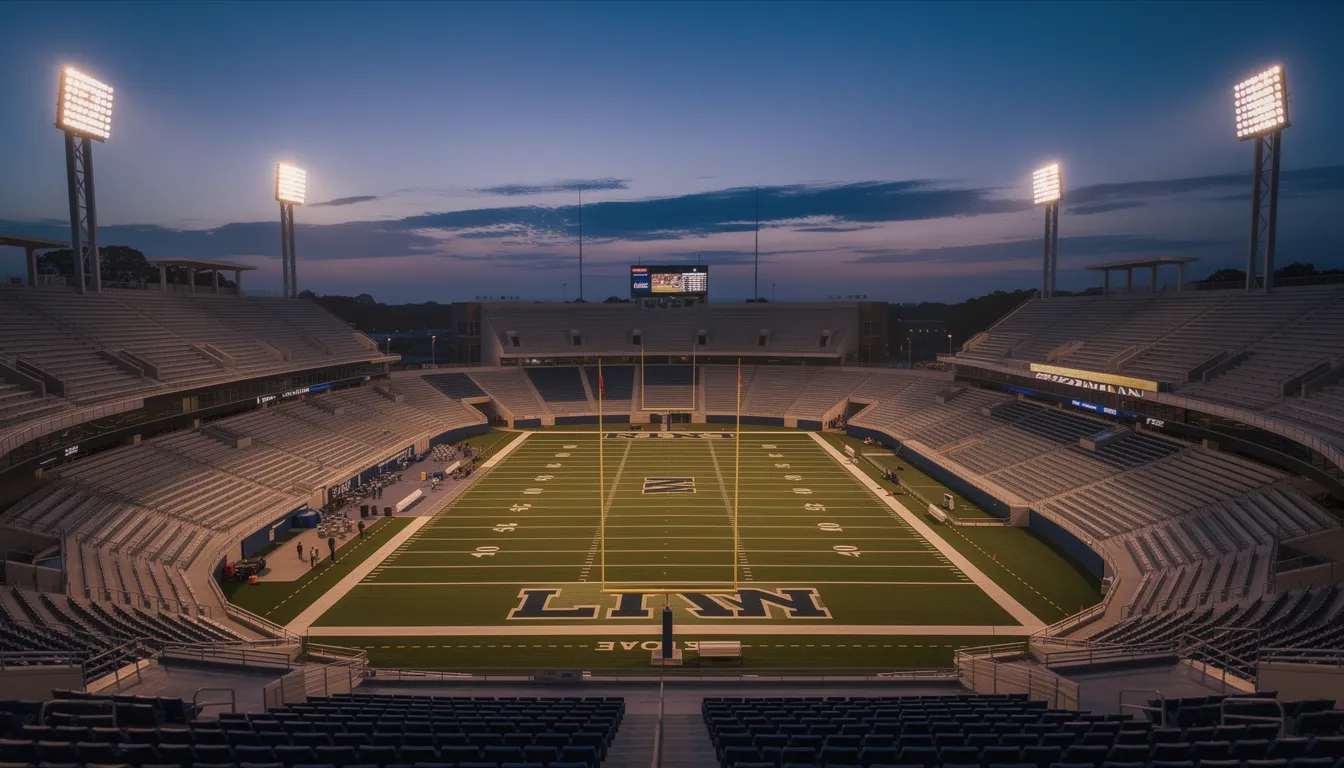
Every fall, somewhere between 100,000 and 107,000 people funnel into a single stadium in Ann Arbor or Tuscaloosa or Baton Rouge to watch 18-to-22-year-olds play a game. Michigan Stadium seats 107,601. Bryant-Denny Stadium in Tuscaloosa holds 101,821. Fans get to Tennessee's Neyland Stadium by boat because it sits on a river. If you've ever stood in one of those crowds — or watched one on TV and felt a pull in your chest — it's a completely reasonable question to ask: should that feeling factor into where you go to college?
The honest answer is: it can, but probably not the way you think it will. Let's separate the parts of this decision that are real from the parts that are marketing.
The role big-time athletics actually play on campus
At schools with major football or basketball programs, sports aren't just an extracurricular — they're a load-bearing piece of the social calendar. Home game Saturdays at places like Penn State effectively require the surrounding town to absorb a six-figure crowd of visitors for a single afternoon. That's not a metaphor about school spirit; it's a literal traffic and infrastructure event. The band plays, the student section chants a fight song that alumni from fifty years ago still know by heart, and for a few hours a campus of 30,000 or 40,000 strangers acts like one organism.
That shared identity doesn't stay confined to the stadium. It shows up in how people greet each other in town on gameday, in the T-shirts sold at the campus bookstore, in how alumni describe their four years decades after graduating. Research on the "Flutie effect" — named for Boston College quarterback Doug Flutie's Hail Mary against Miami in 1984 — has found that a big win or a national championship really does drive a measurable spike in applications and enrollment at a school. A study from Appalachian State's economics department found that winning a national championship or pulling off a big upset increases the average high school GPA of students who subsequently enroll, even though it can slightly reduce the share of students coming from the very top of their high school class. Winning teams do change who applies, just not in a simple "smarter" or "less serious" direction — and the effect fades over time. That same research found a team significantly outperforming preseason expectations can also boost alumni athletic donations by double digits in a single year. Big-time sports are genuinely intertwined with a school's finances and brand, not just its Saturday afternoons.
None of this is unique to a handful of blue-blood programs, either. The conference map has been reshuffled dramatically in recent years — Oregon, Washington, USC, and UCLA joined the Big Ten; Arizona, Arizona State, Utah, and Colorado moved into the Big 12; Stanford and Cal joined the ACC — largely driven by media-rights money tied to football. If you're building a college list around "big sports culture," the four Power Conferences (ACC, Big Ten, Big 12, and SEC) are where nearly all of that spectacle, spending, and national television exposure now lives.
Fan, student, or recruit — three very different questions
Here's where people conflate three genuinely different decisions.
Choosing a school as a fan or spectator is about atmosphere. You want Saturdays that feel like an event, a student section that sells out, maybe a rivalry game that shuts down the town. This is a legitimate "fit" factor — plenty of students genuinely thrive on that energy and would feel flat at a school without it. It costs you nothing extra to want it, beyond maybe a higher price tag for a big public flagship versus a smaller private school.
Choosing a school as a student-athlete is an entirely different calculation, starting with a much smaller applicant pool than most families assume. Roughly 554,298 student-athletes competed in NCAA championship sports in 2024-25 — an all-time high — split roughly evenly across Division I (202,353), Division II (141,067), and Division III (210,878). That sounds like a lot until you compare it to the roughly 8 million kids playing sports in U.S. high schools. Depending on the sport, a bit over 7% of high school athletes — about 1 in 13 — go on to play a varsity sport at any college level, and less than 2% (about 1 in 57) make it to NCAA Division I. The odds get worse the more competitive the sport: male basketball players face roughly 110:1 odds of a Division I roster spot, female tennis players around 182:1.
If you're actually being recruited, the process looks nothing like walking onto a team because you're good back home. Division I coaches work with a limited number of allocated recruiting slots per class, often stratified by academic profile — some programs only extend a set number of offers to recruits who also clear a certain GPA or test-score bar, because the athletic department answers to admissions and to NCAA academic-eligibility rules too. Coaches typically find their top targets years in advance through club circuits, camps, and national rankings, not through a highlight tape a family sends in cold. And being recruited is a "hook," not a guarantee: you still generally have to meet the school's admission standards, and even a coach's top choice can be squeezed out by a limited number of roster spots.
It's also worth knowing the divisional landscape, because "Division I" doesn't mean what people assume:
- Division I schools (361 as of 2025-26) can offer full or partial athletic scholarships, including multiyear and cost-of-attendance models, and this is where nearly all of the football and basketball attention lives.
- Division II (292 schools) uses a partial-scholarship model — most athletes get some athletic money, but full rides are rarer.
- Division III (422 schools) offers no athletic scholarships at all, though D3 athletes can absolutely receive academic or need-based aid.
- NAIA, a separate governing body from the NCAA with 250-plus member schools and more than 83,000 athletes nationally, awards over $1.3 billion in scholarships a year through an equivalency model, and is often comparable in competitiveness to NCAA Division II.
The financial mechanics of college sports have also shifted recently. Following the House v. NCAA settlement approved in June 2025, Division I schools — starting with the Power Conferences — can now directly share revenue with athletes, on top of NIL (name, image, likeness) deals and scholarships, up to a cap tied to 22% of average Power Conference revenue, starting around $20 million per school in 2025-26 and growing toward roughly $33 million by 2034-35. That's a genuinely new era for recruited athletes — but it has essentially no bearing on campus life for the other 97%-plus of students who'll never wear the uniform.
The data on how few students actually play — and what athletics spending buys
This is the number that tends to reset expectations: even at schools obsessed with their teams, the overwhelming majority of students in the stands are just students. NCAA athletes made up roughly 554,000 people out of an undergraduate population of over 22 million nationally — a small slice, concentrated on specific campuses and specific rosters. Most of a school's "sports culture" is being generated and consumed by people who will never compete in it.
Meanwhile, the money involved is real and lopsided. A Knight Foundation-backed database tracking finances at more than 230 public Division I schools found that athletic departments at the largest "Power" conference schools now spend more than $100,000 per athlete annually — somewhere between 8 and 12 times what those same universities spend per full-time student on academics. That gap shows up physically on campus. Clemson spent roughly $128.5 million across three athletic facility projects in an 18-month span, including a $55 million football operations center with a barber shop, a putt-putt course, laser tag, and a bowling alley — funded through ticket-price bond fees and booster donations rather than academic budgets. Oregon's Nike-funded Hatfield-Dowlin Complex, a 145,000-square-foot football facility, cost somewhere between roughly $68 million and $138 million depending on the estimate, compared to a similarly sized Tennessee facility built for about $45 million. One university administrator quoted in coverage of the Clemson spending called the amenities-heavy approach "pandering to the fantasies of 18-year-olds," with "nothing whatsoever to do with the mission of a university" — while athletic officials countered that the flashy extras are a small slice of a budget mostly spent on coaching and athlete development.
The point isn't that this spending is good or bad. It's that it's largely walled off from the academic budget, funded through athletic department revenue and donor money earmarked for athletics — not diverted from your classroom or financial aid. But it's also not a signal of academic strength. A gorgeous football facility tells you a lot about a school's athletic fundraising and almost nothing about its class sizes, research opportunities, or teaching quality.
The common misconception: sports quality and academic quality don't move together
This is the trap worth naming directly: assuming a powerhouse athletic program means a powerhouse academic program, or its mirror image — assuming that if a school isn't a sports school, it must not have real school spirit.
Both are wrong, with clean examples on both sides.
On one end, the University of Chicago is one of the most academically rigorous universities in the country and has essentially no big-time sports culture — the school's president outlawed varsity football in 1939 as a "crass" distraction from academics, decades after the school had actually been a football powerhouse under legendary coach Amos Alonzo Stagg. Today students self-deprecatingly call it the place "where fun goes to die," with no marching band or tailgate culture remotely resembling a Power Conference school. Nobody would argue UChicago suffers academically for it.
On the other end, sports culture doesn't require a stadium. Small liberal arts colleges like Bowdoin and Swarthmore build intense school spirit around a totally different model — Bowdoin has roughly half its student body playing some intercollegiate sport, with athletics functioning as campus-wide social glue rather than a mass spectator event. School spirit at a 2,000-student college looks like everyone knowing the players personally and packing a 500-seat gym, not 100,000 strangers tailgating in a parking lot — but it's no less real to the people living it.
The evidence-backed relationship between athletics and academics is messier than "good teams = good school" or the reverse. The Flutie-effect research found athletic success shifts application volume and can shift average incoming GPA upward, while simultaneously reducing the share of students from the very top of their graduating class — and the effect matters most to students who already have below-average test scores, since stronger academic profiles are swayed more by academic reputation than athletic success. A big win can move how many people apply; it doesn't reliably move how rigorous the resulting class is.
How to actually weigh this in your decision
If you're building a college list, here's a more useful way to sort the sports question than "do I like their team."
- Decide honestly whether you're a fan or a recruit. If you're not being actively recruited by coaches — attending camps, getting calls, discussing a roster spot — treat any "maybe I'll walk on" plan as a long shot, not a plan. Most walk-on spots go to athletes coaches already know from the recruiting pipeline, not to students who show up to tryouts cold.
- Separate atmosphere from academics in your evaluation. A great gameday scene is a legitimate quality-of-life factor, similar to weather, location, or dorm culture — weigh it as one input among many, not as evidence about teaching quality, research access, or post-grad outcomes.
- Check who's actually paying for the sports program. At public flagships, ask whether tuition includes a mandatory athletic fee and how large it is — that's the one place athletics spending directly touches your wallet, separate from the booster- and TV-money-funded facilities arms race. Weigh that against financial fit like any other cost, rather than assuming a big sports school is automatically pricier.
- If you want strong school spirit without the stadium scale, look at smaller schools deliberately. Community and identity aren't exclusive to Power Conference football; they just look different — closer, smaller, and often just as intense to the people inside it.
- If you are a recruited athlete, get the recruiting realities in writing early. Ask coaches directly where you sit on the depth chart, how many others are being recruited for your spot, and what happens to your scholarship if you're injured or a new coach arrives. Academic admission standards still apply — a coach's interest is a hook, not an acceptance letter.
FAQ
Does going to a school with a great sports team make my degree more valuable? Not directly. Employers and grad schools care about your major, GPA, internships, and academic reputation — not whether the football team made a bowl game. Athletic success can matter indirectly through alumni network energy and brand recognition, but that's a soft factor, not a resume line.
Is it true that most college athletes don't get full scholarships? Yes, for most sports. Only Division I offers scholarships as full or partial cost-of-attendance packages, and even there many sports are "equivalency" sports where scholarship money is split across a roster. Division II offers partial scholarships. Division III offers none, though academic and need-based aid is still available.
What are the actual odds I'll play a varsity sport in college if I played in high school? A bit over 7% of high school athletes — roughly 1 in 13 — go on to play a varsity sport at any college level (D1, D2, D3, or NAIA combined), and less than 2% reach NCAA Division I specifically. Odds vary a lot by sport, and improve somewhat for strong students, since attending a four-year college for academic reasons alone appears to roughly double some athletes' odds of also making a roster.
Does a school's athletic spending come out of the academic budget? Generally no, directly. Big facility projects and coaching salaries at Power Conference schools are typically funded through athletic department revenue — ticket sales, media rights, donor gifts earmarked for athletics, and revenue-sharing pools tied to media deals — rather than tuition or academic appropriations. That said, some public universities do charge a mandatory student athletic fee worth checking on your bill.
What's the difference between choosing a school for game-day atmosphere versus as a recruited athlete? As a fan, you're evaluating vibe and how much campus life revolves around gameday — a valid personal preference with no admissions stakes. As a recruit, you're in a formal process involving coaches, limited scholarship and roster slots, and NCAA or NAIA eligibility rules, and you still generally need to meet the school's academic admission standards independent of athletic interest.
Can a school have strong school spirit without a major sports program? Yes. Community identity comes from shared experience at any scale — a 2,000-student college where half the campus plays some varsity sport can generate just as much genuine loyalty as a 100,000-seat stadium, just through closeness rather than spectacle.
Sources
- Probability of Competing Beyond High School - NCAA.org
- A record number of NCAA student-athletes participated in 2024-25 - NCAA.org
- Odds of a High School Athlete Making a College Team - ScholarshipStats.com
- Division I Athletic Recruitment: What Students Need to Know - IvyWise
- The College Divisions Explained (D1 vs. D2 vs. D3) - NCSA
- What are the Differences Between the NAIA and NCAA? - Honest Game
- New database reveals academic and athletic spending trends at public universities - Knight Foundation
- State Universities Spending Over $100,000 Per Athlete, 8 to 12 Times More Than Academics - HEPinc
- Athletics arms race: How and why Clemson is spending more than $128 million on new facilities - Post and Courier
- Hatfield-Dowlin Complex - Wikipedia
- The Flutie Effect: How Athletic Success Boosts College Applications - Forbes/HBS Working Knowledge
- The Flutie Effect: The Influence of College Football Upsets and National Championships - Appalachian State University
- 80 Years Ago, a Football Powerhouse Ditched the Sport as a 'Crass' Distraction - The Chronicle of Higher Education
- Colleges With the Most School Spirit - Niche Blog
- 25 Largest College Football Stadiums in the US - CollegeXpress
- The House v. NCAA Settlement and its Effects on Higher Ed Athletics - United Educators
- 2025 College Football Realignment - College Sports Network

